


How Amit Shah’s ‘Chanakya Niti’ Redrew the Political Map of Bengal
Amit Shah’s strategic "Chanakya Niti" dismantles TMC’s fortress, securing a historic 207-seat landslide victory for the BJP in West Bengal
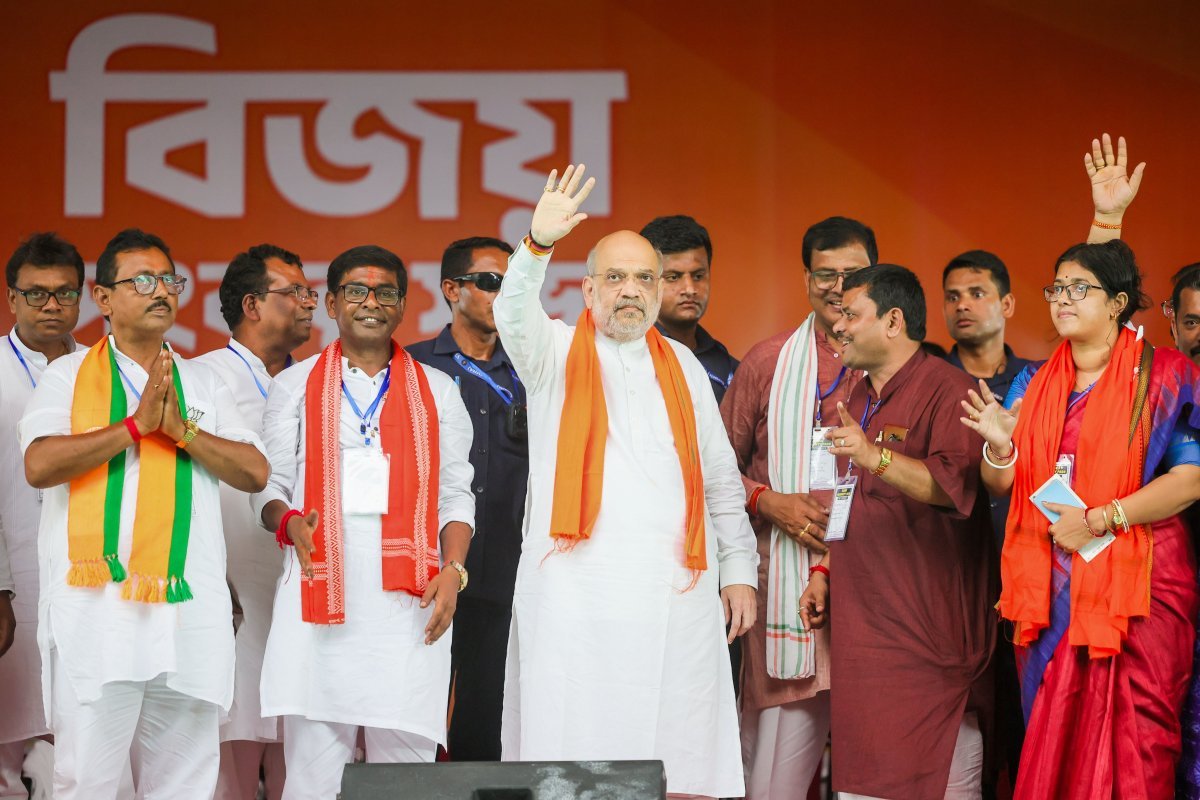
Lucknow / Kolkata : The political landscape of India has witnessed a seismic shift. From the rugged terrains of Chhattisgarh to the industrial heartlands of Haryana, Maharashtra, and Delhi, the lotus has bloomed with unprecedented vigor. However, the crown jewel of this saffron surge is undoubtedly West Bengal. In a historic mandate that has sent shockwaves through the political corridors of India, the strategic brilliance of Union Home Minister Amit Shah has successfully dismantled the decades-old fortifications of the Trinamool Congress (TMC).
The most symbolic victory of this election occurred in Bhawanipur, the inner sanctum of Mamata Banerjee’s political power. By orchestrating a clinical campaign in this high-profile constituency, Amit Shah proved that no fortress is impregnable when met with a superior strategy. Whether it is the power corridors of New Delhi or the narrow lanes of Bhawanipur, the name Amit Shah has become synonymous with converting a resolute "Sankalp" (resolve) into a tangible "Parinam" (result).
The BJP’s rise in Bengal is not a stroke of luck but a masterclass in long-term political engineering. In 2016, the party was a marginal player with just 3 seats. By 2021, Shah’s groundwork propelled that number to 77. The 2026 results, where the BJP touched the staggering 207-seat mark, represent the pinnacle of Shah’s "Booth Management" philosophy.
While the opposition remained entangled in rhetoric, Shah spent 15 grueling days on the ground, traversing the dusty tracks of rural Bengal. He abandoned the comforts of New Delhi to connect with the "Mati" (soil) of Bengal, transforming the election from a mere political contest into a mission to reclaim the state’s lost identity.
For decades, West Bengal was shrouded in a silence that echoed industrial decay rather than progress. From 35 years of Communist rule that crippled the state's economy to 15 years of TMC governance marked by allegations of "cut-money," syndicate Raj, and institutionalized violence, the state was yearning for a breath of fresh air.
Incidents ranging from the horrors of Sandeshkhali to the tragic negligence at R.G. Kar Medical College had wounded the soul of Bengal. Amit Shah sensed this deep-seated resentment. His strategy focused on:
- Zero Tolerance for Corruption: Appealing to the youth who were forced to migrate due to lack of jobs.
- Cultural Restoration: Reminding voters of a Bengal that once led the nation in spirituality and literature, promising a return to "Sonar Bangla."
- The Silent Army: Deploying a massive network of grassroots workers who operated under the radar to secure every polling station.
As the votes were counted on May 4, the "Modi Magic" combined with the "Shah Factor" created a political tsunami. The saffron sun has finally risen over the Bay of Bengal, ending 50 years of political volatility.
Amit Shah’s prophecy—that 2026 would belong to the BJP—is no longer a headline; it is a reality. This victory belongs to the mothers and sisters of Bengal who sought dignity, and the youth who sought opportunity. Under the leadership of PM Narendra Modi and the strategic guardianship of Amit Shah, West Bengal has officially embarked on its journey to become "Sonar Bangla" once again.
What's Your Reaction?
 Like
0
Like
0
 Dislike
0
Dislike
0
 Love
0
Love
0
 Funny
0
Funny
0
 Wow
0
Wow
0
 Sad
0
Sad
0
 Angry
0
Angry
0

Journalist













Comments (0)