


Rule of Law Over Political Theatre: Amit Shah Dismantles No-Confidence Motion
Amit Shah defends the Speaker’s neutrality as the Lok Sabha rejects a rare no-confidence motion, emphasizing parliamentary rules over political theatre.
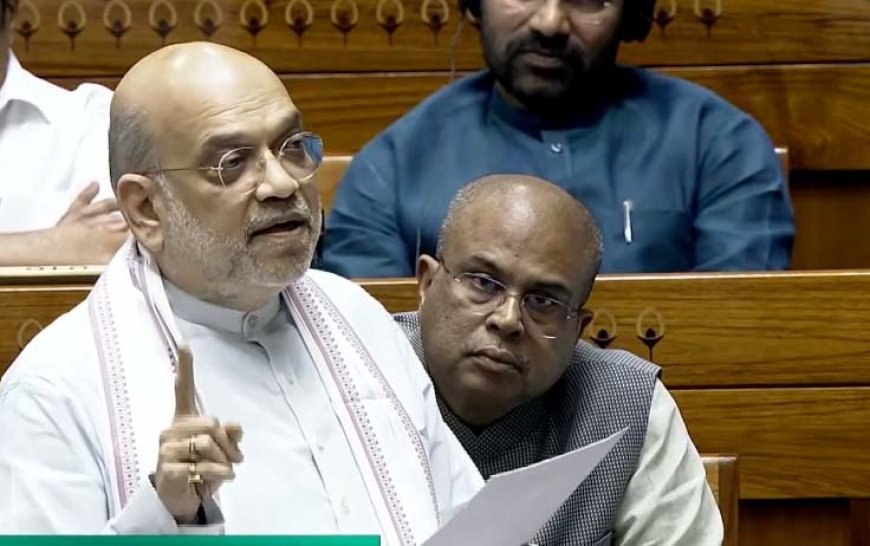
Lucknow : The floor of the Lok Sabha became the stage for a masterclass in parliamentary discipline today as Union Home Minister Amit Shah addressed the rare no-confidence motion against the Speaker. In a marathon session lasting 13 hours, the "Chanakya" of modern Indian politics shifted the narrative from opposition grievances to a stern reminder: the temple of democracy is governed by decorum, not disruption.
Discipline Over Disorder
Responding to the motion—the first of its kind in nearly forty years—Shah delivered a pointed rebuttal to the opposition's claims of partiality. He underscored that the Speaker acts as the supreme guardian of the House, empowered by Rules 374, 375, and 380 to maintain order.
"Parliament is not a public fair or a political rally," voices within the House echoed during the debate. "Those who disregard the established rules must face the consequences, whether it is the switching off of a microphone or removal from the chamber."
The debate took a sharp turn toward the consistency of the principal opposition. Critics questioned whether the motion was a genuine critique of the Chair or a strategic "smokescreen" to mask the frequent absences of Rahul Gandhi. Data discussed in political circles highlighted the leader's overseas visits to nations like Germany, Singapore, and Vietnam during crucial sessions, raising a fundamental question: How can a member demand floor time while remaining absent from the country?
The Modernization of Democracy
- Beyond the political friction, the session highlighted the institutional evolution under the current administration. Observers noted several landmark shifts in parliamentary functioning:
- Enhanced Productivity: Record-breaking hours and expanded Zero Hour sessions.
- Inclusivity: Increased opportunities for first-time women MPs and the promotion of regional languages.
- Digital Transformation: The transition to a paperless Parliament via the e-Vidhan application.
Ultimately, the motion was resoundingly rejected by a voice vote. For many present, the day’s proceedings served as a vital political lesson. The consensus remained that the global reputation of Indian democracy hinges on respecting the neutrality of the presiding officer. As the dust settled, the message was clear: the strength of the House lies not in shouting down the Chair, but in the rigorous adherence to the traditions that have defined the nation for decades.
What's Your Reaction?
 Like
0
Like
0
 Dislike
0
Dislike
0
 Love
0
Love
0
 Funny
0
Funny
0
 Wow
0
Wow
0
 Sad
0
Sad
0
 Angry
0
Angry
0

Journalist












Comments (0)