




















Indigenous Soluble Fertilizer Pilot Project Completed in Record Time
India launches a soluble fertilizer pilot plant in Nagpur, achieving self-reliance amid China’s 2026 phosphate export ban.


Lucknow : In a strategic triumph for India’s agricultural sovereignty, a pioneering Soluble Fertilizer Pilot Plant has successfully commenced operations in Nagpur. This breakthrough comes at a critical juncture, as China extends its export restrictions on specialty phosphate fertilizers through 2026, threatening global supply chains.
A Landmark Achievement in Atmanirbharta
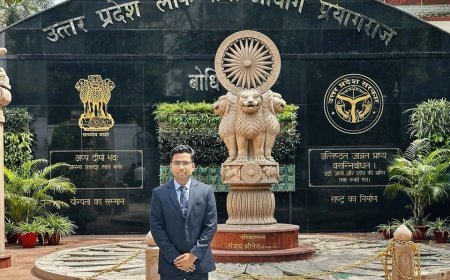
The facility, inaugurated by Dr. Anupam Agnihotri, Director of the Jawaharlal Nehru Aluminium Research Development and Design Centre (JNARDDC), was completed nearly a month ahead of schedule. Developed under a JNARDDC-funded research project, the plant signifies a major leap in India’s capacity to manufacture high-value, water-soluble fertilizers domestically—products that were previously heavily reliant on expensive imports.
The project utilizes an innovative Green Technology developed by Ishita International. This eco-friendly process transitioned from laboratory research to a functional pilot plant in record time since its inception in April. Key highlights of the project include:
Import Substitution: Domestic production of essential specialty fertilizers to bypass international trade barriers.
Strategic Scaling: Major Indian fertilizer corporations are already preparing to adopt and scale this technology for commercial production.
Economic Impact: The move is expected to drastically reduce input costs for farmers, generate high-tech employment, and ensure a steady supply of nutrients regardless of global geopolitical shifts.
Operating under the Ministry of Mines, JNARDDC has proven to be a vital catalyst for strategic R&D. By fostering indigenous solutions, the center is not only securing the fertilizer sector but also paving the way for self-reliance in critical minerals and other strategic technologies. This project serves as a definitive model for how institutional backing can accelerate the "Make in India" initiative, transforming scientific concepts into industrial realities within months.
What's Your Reaction?
 Like
0
Like
0
 Dislike
0
Dislike
0
 Love
0
Love
0
 Funny
0
Funny
0
 Angry
0
Angry
0
 Sad
0
Sad
0
 Wow
0
Wow
0